
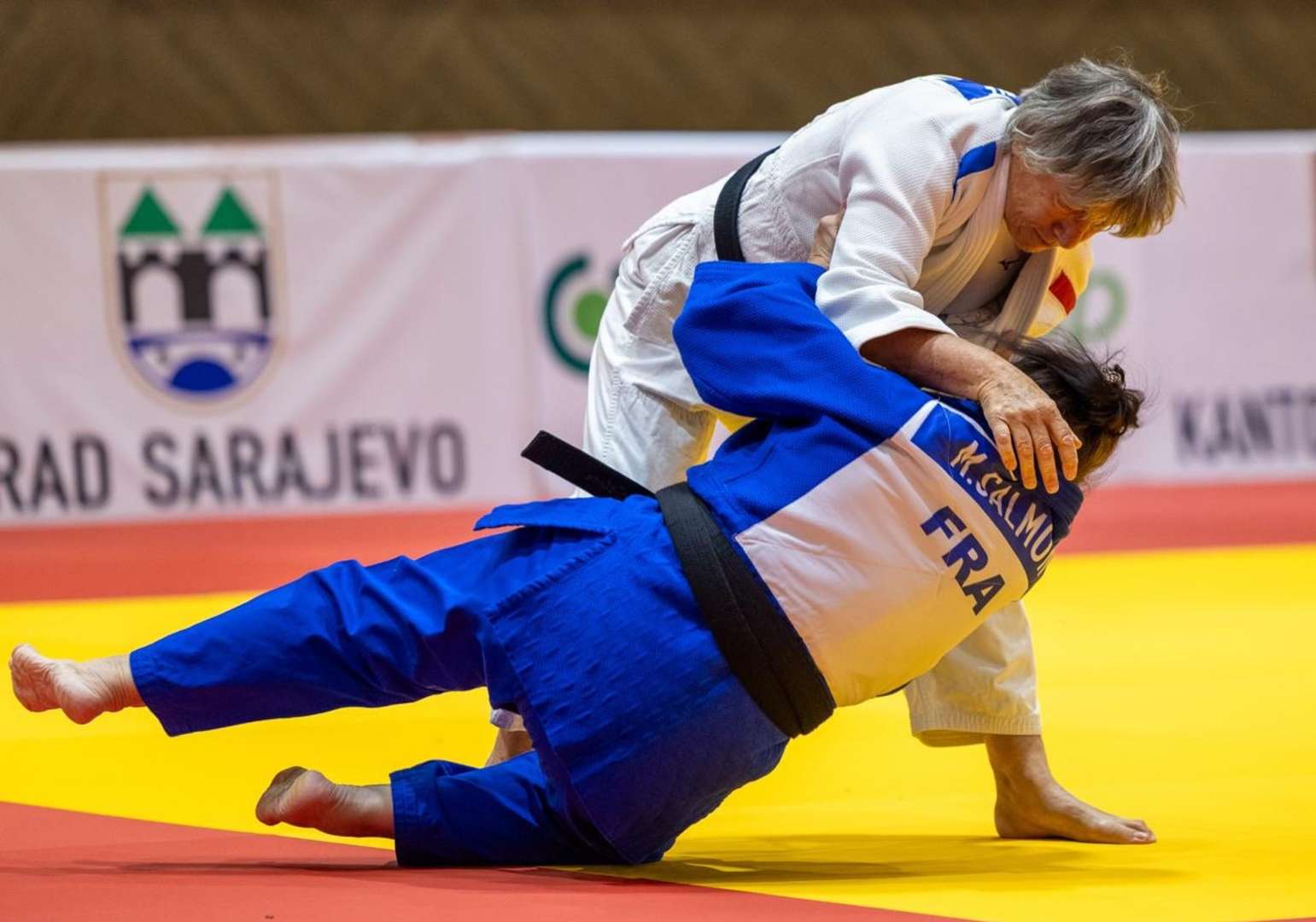
This is not a question of commitment, ability or passion. It reflects the history of access to sport. For many of today’s veteran judoka, opportunities for girls and women to begin, continue and compete in judo have not been as widely available as they are now. In some countries and communities, cultural expectations, limited pathways and a lack of visible role models made that journey more difficult.
The picture on the World Judo Tour is different. Women’s judo is an essential and highly visible part of every event, with established weight categories, the same rules, the same sporting recognition and the same prize money as the men’s. Female athletes are among the sport’s leading figures, inspiring new generations through their technical excellence, courage and personality. An example of this, among many others, is Clarisse Agbegnenou (FRA) having been designated an Athlete Role Model for the upcoming Youth Olympic Games Dakar 2026.
The task now is to ensure that this progress is sustained at every stage of a judoka’s life. It is not enough to welcome girls onto the tatami; the judo community must also make it possible for them to remain, develop and take on roles as athletes, coaches, referees, organisers and leaders.
This is why the International Judo Federation has made women’s participation a major priority across its educational and development work. Through its programmes, the IJF is working to expand access to judo, with particular attention to girls’ participation and the confidence, independence and opportunities that sport can bring.
Practical initiatives are already creating new momentum. Sakura Judo, launched in Peru this summer, brings together athletes, coaches, referees, administrators and emerging leaders, offering a space to share experience and strengthen women’s career pathways within the sport. Its purpose is clear: women should be encouraged to stay in judo after their competitive careers and to see leadership as a place where they belong.
The IJF Academy is equally committed. Its All Women Practical Sessions provide a dedicated learning environment in which women can develop technical competence, confidence, adaptability, communication and leadership. Following the first session in Rome in 2025, the second, held in Istanbul this year, brought 31 participants from 15 countries together. The IJF also supports women coaches through the Women in Sport High-Performance Pathway and annual IJF Academy scholarships, helping to build a stronger and more representative coaching community.
These programmes matter because access must lead to continuity. A young girl who enters a dojo today should be able to imagine a future in judo that is as broad and lasting as her ambition: competing, teaching, refereeing, leading a club, supporting her community or, one day, returning to the tatami as a veteran.
The women competing in Sarajevo are part of that story. They represent years of training, resilience and attachment to judo. Their example reminds us that a successful pathway is not defined by one medal or one moment but by the possibility of belonging to judo for a lifetime.
For the IJF, expanding access to sport and judo for women and girls is not an additional objective. It is central to building a stronger, fairer and more complete global judo family.